
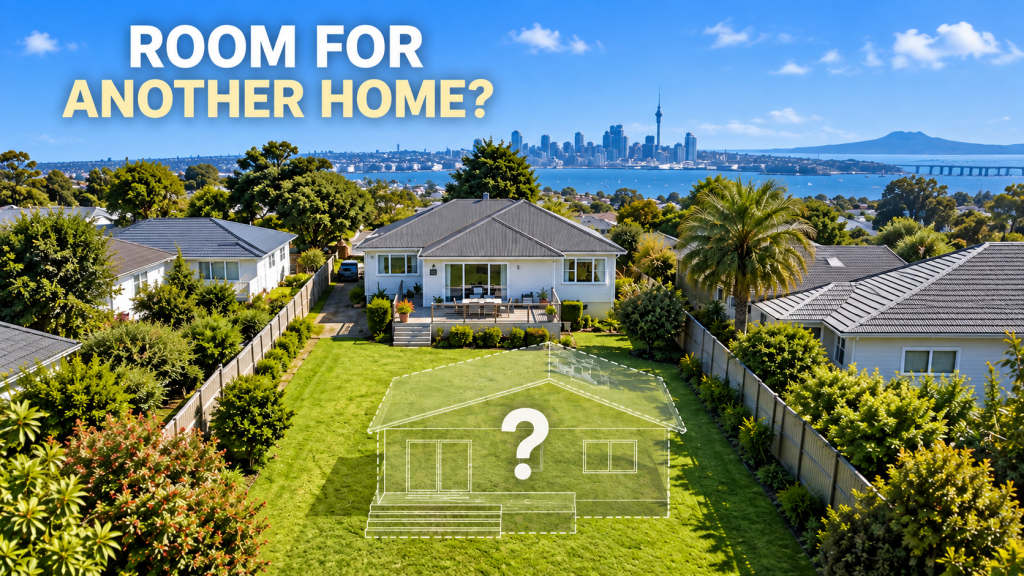
A large backyard may look like an opportunity. But the amount of land you can see is only the beginning.
You step into the backyard and see a large open space.
There appears to be plenty of room behind the existing house.
So the obvious question is:
Could another home go there?
Sometimes, the answer may be yes.
But a large backyard by itself does not tell you whether another home is practical — or even possible.
Before thinking about what you could build, it helps to understand how the whole property works.
A big backyard can be misleading
When you first think about the potential of your property, it is natural to focus on the amount of land you can see.
A large backyard can immediately suggest opportunity.
But open space is not necessarily usable building space.
Access, where the existing house sits, services, drainage and planning rules can all affect what may actually be possible.
That is why two properties with similar-sized backyards can have very different possibilities.
Land size tells you how much property you have.
It doesn’t tell you what the property can actually do.
1. Start with access
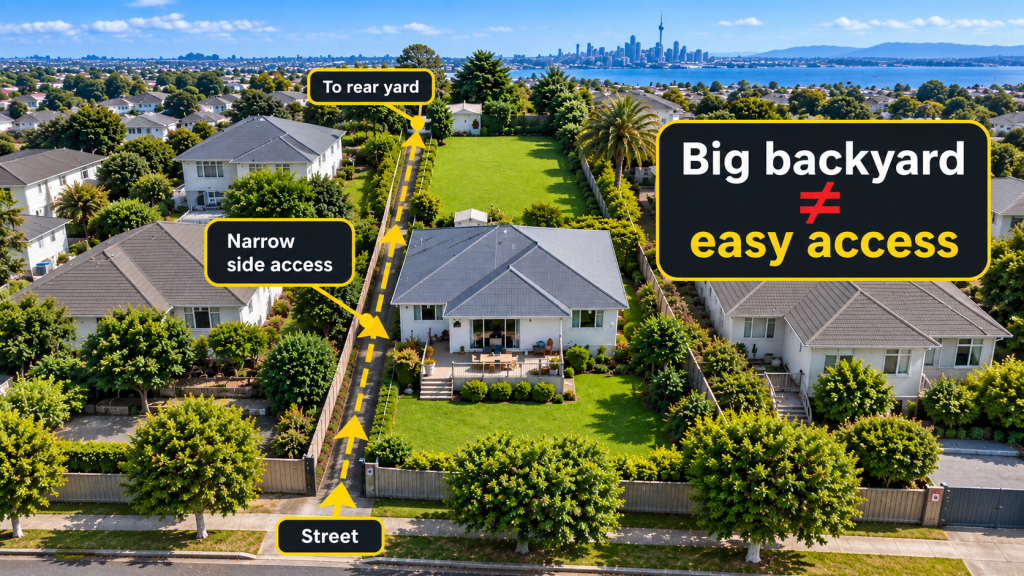
One of the first things to look at is surprisingly simple:
How would you get to the backyard?
There may be plenty of space behind the house. But if there is only a narrow path down the side, getting vehicles, equipment and building materials to the back may be difficult.
And access is not only about the finished home.
You also need to think about how it could actually be built.
This is why it helps to look beyond the backyard itself and follow the property all the way from the street to the rear.
A simple access issue can change what is practical — and finding that out early may save you from spending time and money developing an idea that is difficult to deliver.
2. Where the existing house sits matters
The position of your existing home can be just as important as the size of your backyard.
Imagine two properties with similar-sized sections.
On one property, the house leaves useful space down the side and a relatively clear area behind it.
On the other, the house may sit closer to a boundary or in a position that makes getting to the backyard much more difficult.
The properties may look similar on paper.
But what you can realistically do with them may be very different.
So when looking at the potential of a property, don’t just ask:
“How big is the section?”
Also ask:
“Where does the existing house sit on it?”
3. What you can’t see may matter just as much
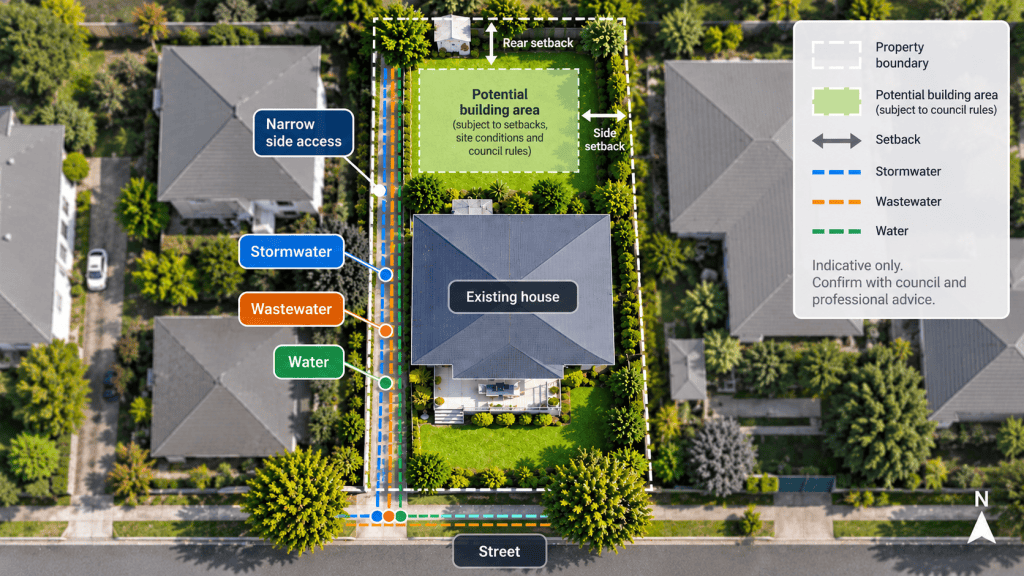
Some important things may not be obvious when you stand in the backyard.
Stormwater, wastewater and other services can affect where another home could potentially go and what additional work might be needed.
In other words:
A large empty lawn above ground doesn’t necessarily mean there is a simple building opportunity below it.
This is where the question begins to change from:
“Is there enough room?”
to:
“How could another home actually work on this property?”
That second question is much more useful.
4. Planning rules add another layer
Then there are the planning rules that apply to the property.
Depending on the site and what you want to build, there may be requirements around things such as how close a building can be to a boundary, how much of the site can be covered by buildings, outdoor space and building height.
You don’t need to know every rule before you start exploring an idea.
But you do need to recognise that no single factor gives you the answer.
A certain zoning doesn’t automatically mean you can build what you have in mind.
A large section doesn’t automatically mean you can add another home.
And a large backyard doesn’t automatically mean the space is usable for building.
You need to look at the property as a whole.
5. Same size. Different potential.
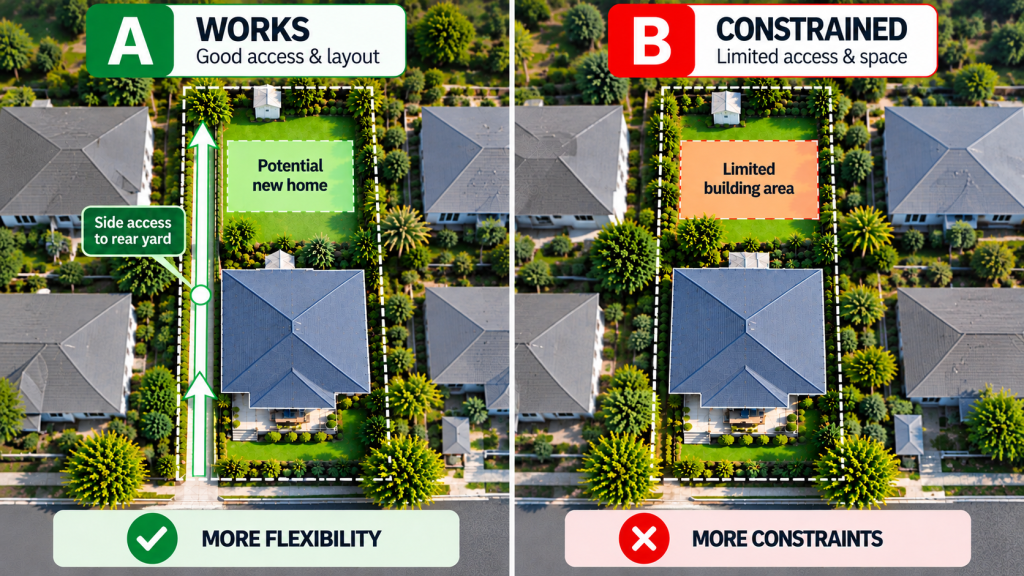
This is perhaps the easiest way to see the difference.
Imagine Property A and Property B have similar-sized sections and backyards.
Property A
The existing house leaves useful side access and a clear area at the rear.
There may be an opportunity worth investigating further.
Property B
The backyard may look just as large.
But the position of the house, limited access or other site constraints may make another home much more difficult.
At first glance, both properties may look as though they offer the same opportunity.
They don’t necessarily.
Same-sized sections can have very different potential.
This matters not only if you already own a home.
It can also matter when you’re buying one.
If you pay more for a property because it has a “big section” and assume you will be able to build another home later, you may be paying for potential that hasn’t actually been confirmed.
Possible doesn’t always mean worthwhile
Even if another home can potentially be built, there is another question:
Should you actually do it?
Something can be possible to build but too expensive to make sense.
It might take longer than you expected.
It might require more changes to the existing property than you are comfortable with.
Or developing the property may simply not fit your future plans.
So there are really three different questions:
Can it be done?
Does it make financial and practical sense?
Does it help you achieve what you actually want from the property?
Those questions should not be treated as the same decision.
Sometimes the best outcome is to develop.
Sometimes it is to explore a smaller option.
And sometimes the best decision is to leave the property exactly as it is.
Before you start drawing another house in the backyard
If you have a large backyard, it can be tempting to start with:
“How much can I build here?”
I would start one step earlier.
Look at:
Access → Where the house sits → Services → Planning rules → Usable space
Then ask:
What can my property realistically support — and would it be worthwhile for me?
Understanding that first can help you avoid spending money too early, compare your options more clearly and make a better-informed decision about what to do next.
Watch: Can You Build Another Home in Your Backyard?
Auckland Property Insight
Helping you become decision-ready.
Important note
This article provides general property information and is intended to help you understand the questions worth asking. What may be possible depends on the individual property, applicable planning and infrastructure requirements, and what you are proposing to build. Property-specific professional advice should be obtained before making development or investment decisions.
 The Property Decision Library
Leave a comment