
When a home starts to feel too small, extending can seem like the obvious solution.
Another bedroom. A larger living area. More storage. Perhaps a better connection to the backyard.
But before asking “Can we extend?”, there is a more important question:
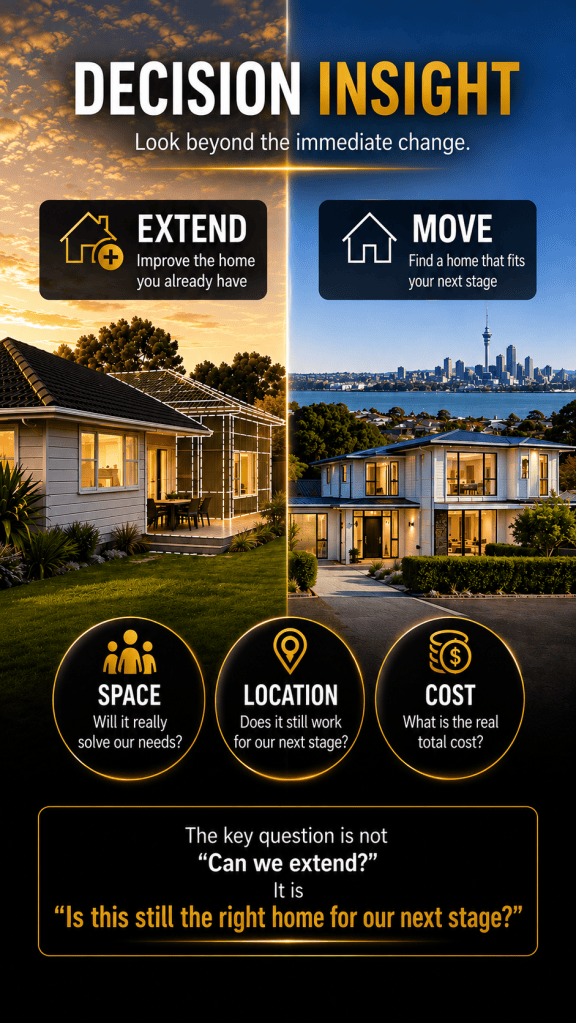
“Is this still the right home for our next stage?”
An extension can change a house. But it may not solve everything that has changed around the family.
Before You Extend, Look at Three Things
At Auckland Property Insight, we use the SCALE™ decision approach to look beyond the immediate property problem.
For an extend-or-move decision, three questions are particularly useful:
Space. Location. Cost.
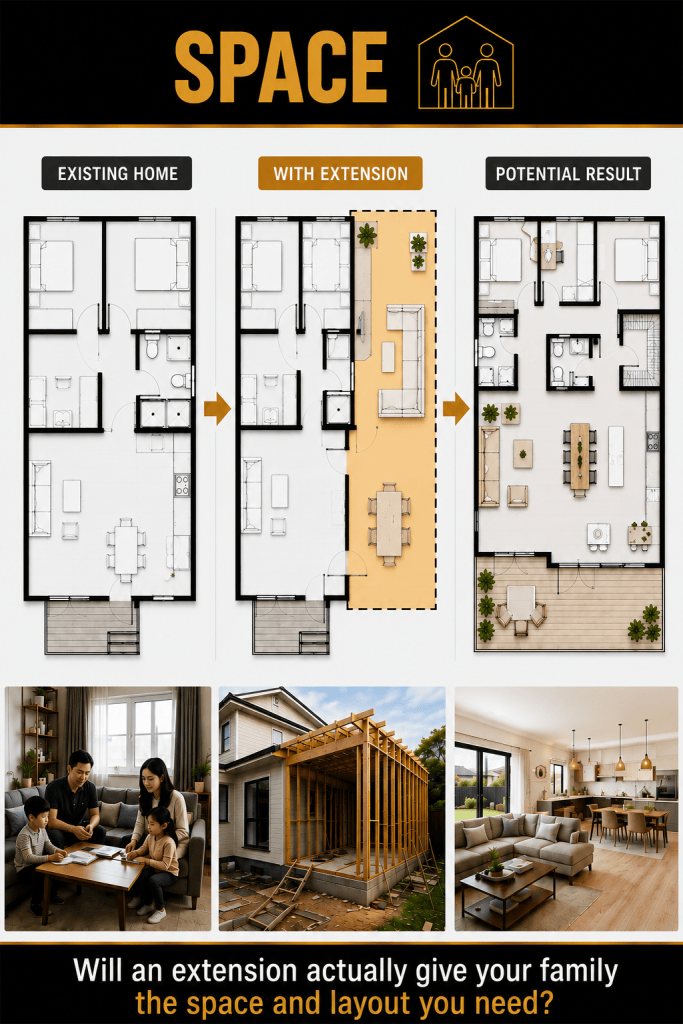
1. SPACE — Will the Extension Actually Solve the Problem?
More floor area does not automatically mean a better home.
Before extending, consider whether the additional space will genuinely improve the layout, flow and everyday function of the home — not simply increase its size.
Think about bedrooms and living areas, privacy, working space, storage, indoor-outdoor connection, and how your family is likely to use the home over the next several years.
The question is not simply:
“Can we create more space?”
It is:
“Will we create the right space?”
2. LOCATION — Does This Location Still Work for Your Next Stage?
A house can be changed considerably.
Its location cannot.
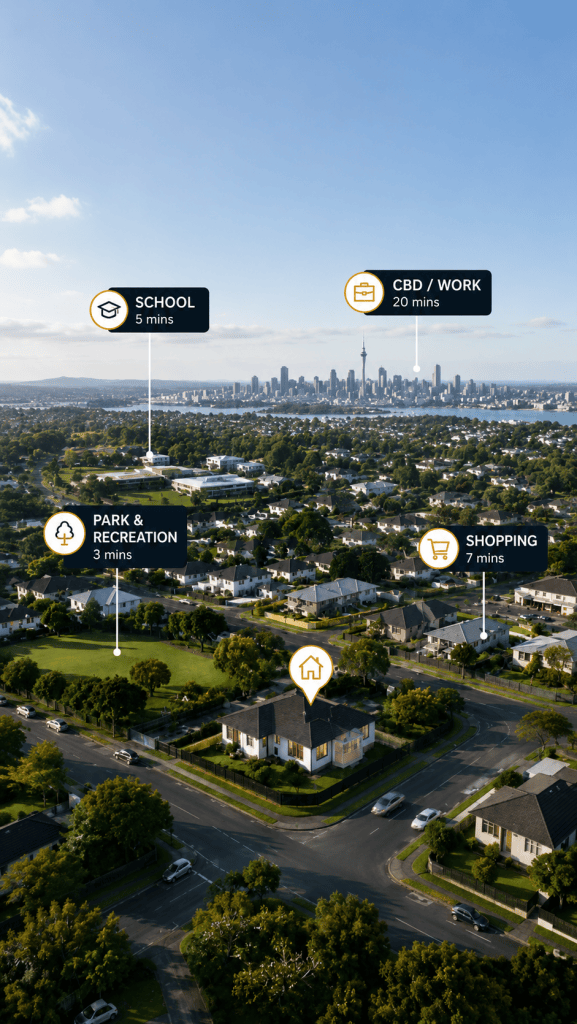
Before committing to an extension, consider whether the location still supports the way your family is likely to live over the next several years.
Think about everyday factors such as schools, work and commuting, family connections, recreation, shopping and lifestyle.
If the location remains a strong fit, improving the existing home may make sense.
But if your family’s needs have moved beyond the location as well as the house, an extension may solve only part of the problem.
The useful question is:
“Does this location still support our next stage of life?”
3. COST — What Is the Real Cost of Extending Compared with Moving?
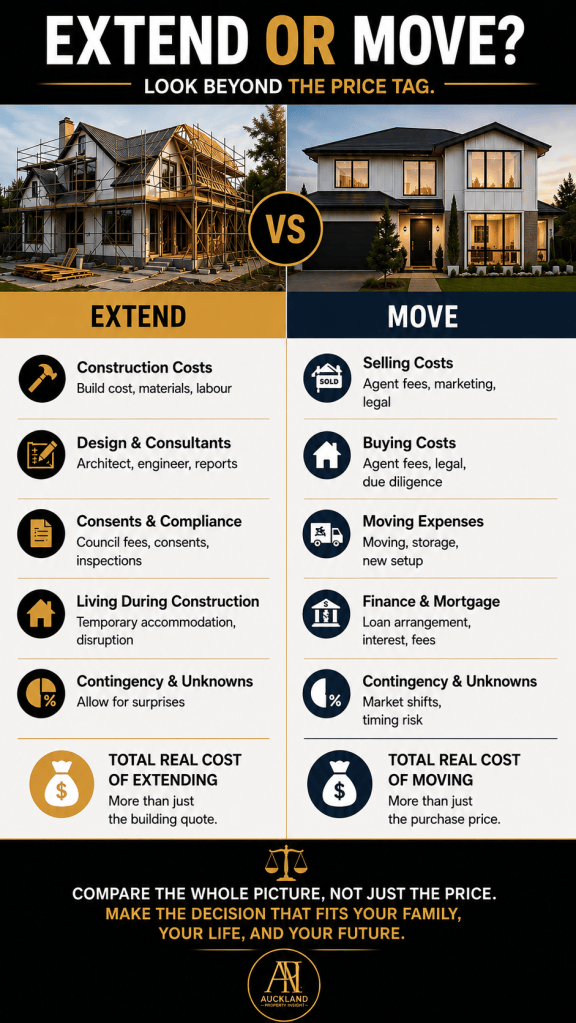
The cost of extending is more than the construction quote.
Depending on the project, there may also be costs for design, consultants, consenting, finance, temporary accommodation, contingency and disruption.
Moving has costs too — including selling, buying, legal fees, moving expenses and possibly a different mortgage commitment.
So the useful comparison is not simply:
“How much will the extension cost?”
It is:
“What is the overall financial and practical cost of extending compared with moving?”
A lower upfront cost does not always mean the better long-term decision.
The Decision Is Bigger Than the Extension
Sometimes extending will clearly be the better decision.
The location is right. The property has suitable potential. The proposed changes solve your family’s needs, and the overall cost makes sense.
In other situations, an extension may add more space without solving the underlying problem.
That is why the decision should come before the design.
Instead of beginning with:
“Can we extend?”
Begin with:
“Is this still the right home for our next stage?”
 The Property Decision Library
Leave a comment